
Sandwich Harbour Namibia | History, Wildlife, Tours & 4x4 Guide
SANDWICH HARBOUR NAMIBIA
The Ultimate Guide to the History, Wildlife, Dunes, Lagoon & 4x4 Tours
Where the Namib Desert meets the Atlantic Ocean
Sandwich Harbour is one of Namibia's most extraordinary natural landscapes — a remote coastal wilderness where enormous Namib Desert dunes descend towards the cold Atlantic Ocean, surrounding a remarkable wetland of lagoons, salt pans, mudflats and shifting sandbars.
Located approximately 65 kilometres south of Walvis Bay, within the Namib-Naukluft National Park, Sandwich Harbour is famous for its spectacular dunes, dramatic coastline, abundant birdlife, fascinating history and challenging 4x4 beach route.
But Sandwich Harbour is much more than a beautiful photograph.
It is a place where desert, ocean, freshwater, saltwater, wildlife, archaeology and human history meet in one of Namibia's most unusual environments.
Today, visitors experience Sandwich Harbour primarily through guided 4x4 tours from Walvis Bay, including half-day, full-day, private, photography and cruise-ship shore excursions.
Red Dune Safaris Namibia offers guided Sandwich Harbour tours designed to combine the spectacular scenery with the history, wildlife and hidden stories that make this destination so special.
QUICK FACTS ABOUT SANDWICH HARBOUR
Location: Atlantic coast of Namibia, south of Walvis Bay
Region: Erongo Region, Namibia
Protected area: Namib-Naukluft National Park
Distance from Walvis Bay: Approximately 55–65 km south, depending on the route and measurement
Ramsar Site: Sandwich Harbour Ramsar Site No. 743
Ramsar designation: 23 August 1995
Ramsar area: Approximately 16,500 hectares
Environment: Coastal desert, lagoon, salt pans, mudflats, beach ridges and Atlantic Ocean
Access: 4x4 / guided access; route conditions are strongly influenced by tides, weather and coastal conditions
Wildlife: Flamingos, pelicans, terns, gulls, waders, cormorants and other coastal birds; Cape fur seals and other desert and coastal wildlife may also be encountered
Historic industries: Fishing, sealing, guano collection and other commercial activities
Archaeology: Archaeological sites in the Ramsar area date back at least 1,000 years
Best known for: Giant dunes, Atlantic Ocean views, birdlife, photography, wildlife and 4x4 adventures
WHAT IS SANDWICH HARBOUR?
Sandwich Harbour is a spectacular coastal wetland and former harbour on Namibia's Atlantic coast.
The name refers to an area that includes the historic Sandwich Bay and the wetland and lagoon system to its south.
The landscape is extraordinarily dynamic. Wind, waves, tides, longshore currents and moving desert sand continually reshape the coastline.
This constant movement is one of the reasons Sandwich Harbour looks different from one visit to the next.
Huge dunes rise directly from the Namib Desert and descend towards the Atlantic Ocean. Between the desert and the sea are salt pans, beach ridges, mudflats and wetlands that provide habitat for large numbers of birds.
The result is one of the world's most dramatic examples of the meeting of desert and ocean.
WHERE IS SANDWICH HARBOUR?
Sandwich Harbour is located on Namibia's Atlantic coast, south of Walvis Bay.
The area lies within the Namib-Naukluft National Park, one of Africa's largest protected areas.
For visitors, Walvis Bay is the main gateway to Sandwich Harbour.
The journey from Walvis Bay takes visitors away from the developed coastal town and into an increasingly wild landscape of salt flats, gravel plains, dunes and beaches.
There is no conventional paved road leading directly to the lagoon.
The final section involves travelling through demanding coastal terrain, which is why a capable 4x4 vehicle and experienced local knowledge are so important.
WHY IS SANDWICH HARBOUR SO SPECIAL?
Very few places in the world combine such extreme environments in such a small area.
At Sandwich Harbour you can experience:
-
The Namib Desert
-
Massive coastal sand dunes
-
The Atlantic Ocean
-
Tidal wetlands
-
Salt pans
-
Mudflats
-
Freshwater-fed wetland areas
-
Brackish water
-
Migratory bird habitat
-
Archaeological sites
-
Historic harbour remains
-
Shipwreck history
-
Cape fur seals
-
Flamingos and pelicans
-
A constantly changing coastline
The Namib Desert is one of the world's oldest deserts, while the Benguela Current flowing along Namibia's coast helps create the cold, dry conditions characteristic of the Namibian coastline.
The result is a remarkable environment where life survives despite extreme aridity.
THE HISTORY OF SANDWICH HARBOUR
A landscape used by people for centuries
Sandwich Harbour has a much older human history than its abandoned buildings and shipwrecks might suggest.
The official Ramsar information for Sandwich Harbour records several archaeological sites dating back at least 1,000 years.
These discoveries demonstrate that people were using this apparently hostile coastal environment long before modern tourism.
The wetlands, marine resources and access to water made the area valuable in an otherwise extremely arid landscape.
Archaeological evidence from the wider coastal Namib also shows that earlier communities made use of marine resources, including shellfish and other coastal foods.
THE ORIGIN OF THE NAME "SANDWICH HARBOUR"
The origin of the name Sandwich Harbour is not completely certain.
One widely repeated explanation connects the name with the British whaling vessel Sandwich, which operated along the southern African coast during the late eighteenth century.
Another theory is that the name may have developed from the German term "Sandfisch", referring to a type of shark associated with the region.
For this reason, it is better to describe the whaling-ship explanation as a historical theory rather than an indisputable fact.
This uncertainty is itself part of the fascinating story of Sandwich Harbour.
A FORMER HARBOUR
Today it is difficult to imagine Sandwich Harbour as a commercial port.
The landscape appears almost completely wild.
Historically, however, the sheltered waters provided an important anchorage along a difficult and isolated coastline.
Ships and coastal traders used the area for activities including fishing, sealing and other maritime industries.
Fresh water was particularly valuable along this extremely arid coast.
Over time, Sandwich Harbour became associated with several commercial activities, including fishing, guano collection and sealing.
The harbour's usefulness was eventually undermined by the same natural forces that make the area so spectacular today:
sand and shifting coastal geography.
The coastline is constantly being reshaped by waves, currents, tides, storms and wind-driven sand.
As the harbour became increasingly affected by sediment and changing sandbars, its usefulness as a commercial harbour declined.
THE GUANO INDUSTRY
One of the most fascinating chapters in Sandwich Harbour's history is the guano industry.
Guano is accumulated seabird droppings and was historically prized as a highly effective natural fertiliser.
The large bird populations at Sandwich Harbour made the area attractive to people looking to exploit this valuable resource.
At one stage, an artificial island was created or enlarged using sand in an attempt to provide birds with a suitable place to roost and increase the amount of guano that could be collected.
But nature had other ideas.
One of the most memorable stories from Sandwich Harbour's industrial history is that jackals were able to reach the artificial island at low tide and disturb the birds.
The attempt demonstrates just how difficult it was to exploit this remote ecosystem commercially.
Eventually, the guano operation was abandoned.
SANDWICH HARBOUR AND SHIPWRECKS
The Namibian coast is famous for shipwrecks, and Sandwich Harbour is part of this extraordinary maritime history.
The Namib-Naukluft Park authorities list the Eagle among the shipwrecks associated with the wider coastal area.
The combination of powerful Atlantic swell, shifting sandbars, fog, strong currents and an inhospitable coastline made navigation along Namibia's coast notoriously difficult.
The coast became known internationally for its dangerous conditions and eventually earned the name Skeleton Coast farther north.
Sandwich Harbour is therefore not simply a desert destination — it is also part of Namibia's remarkable maritime history.
SANDWICH HARBOUR AND THE NAMIB-NAUKLUFT NATIONAL PARK
Sandwich Harbour forms part of the Namib-Naukluft National Park.
The park covers approximately 49,768 square kilometres, making it one of the largest conservation areas in Africa.
The park protects an extraordinary variety of landscapes, including:
-
Namib Desert dunes
-
Gravel plains
-
Coastal wetlands
-
Mountains
-
Inselbergs
-
Ephemeral rivers
-
Canyon landscapes
-
Unique desert vegetation
The Namib-Naukluft Park was proclaimed in its modern form in 1979 through the amalgamation and expansion of earlier protected areas.
The history of conservation in this region goes back even further.
The Namib Desert area was protected under German colonial administration as early as 1907, when Game Reserve No. 3 was proclaimed.
Sandwich Harbour was later incorporated into the protected area.
Today, conservation status is essential for protecting this fragile desert and wetland environment.
SANDWICH HARBOUR: A RAMSAR WETLAND OF INTERNATIONAL IMPORTANCE
One of the most important facts about Sandwich Harbour is often overlooked by visitors.
Sandwich Harbour is an internationally recognised Ramsar Wetland.
It was designated Ramsar Site No. 743 on 23 August 1995.
The Ramsar site covers approximately 16,500 hectares.
The official Ramsar description identifies Sandwich Harbour as one of Namibia's most important coastal wetlands.
The site contains two distinct wetland environments:
1. An aquifer-fed wetland
One section is influenced by underground water moving through the desert.
This supports wetland vegetation despite the extreme aridity surrounding it.
2. A tidal wetland
The second system is influenced by the Atlantic Ocean and includes mudflats, tidal areas and raised shingle or beach bars.
Together these habitats create an exceptionally productive environment for coastal birds.
HOW CAN THERE BE WATER IN THE NAMIB DESERT?
This is one of the most fascinating scientific aspects of Sandwich Harbour.
Although the region is surrounded by one of the world's driest deserts, underground water moves through the sand and contributes to wetland habitats.
The Ramsar documentation identifies an aquifer-fed wetland within the Sandwich Harbour system.
This underground water helps support vegetation and wildlife in an environment where rainfall is extremely limited.
The water conditions vary across the wetland and can include freshwater-influenced and brackish environments.
The interaction between groundwater, tides, ocean water, evaporation and sand creates a highly unusual coastal ecosystem.
WHY DOES SANDWICH HARBOUR HAVE SO MANY BIRDS?
The combination of mudflats, shallow water, wetlands and marine nutrients makes Sandwich Harbour an important feeding area for birds.
The Ramsar site supports large numbers of wading birds and has been identified as one of Namibia's most important coastal wetlands.
An official Ramsar assessment recorded 179,000 wading birds in February 1991.
More recent counts have varied considerably depending on season and conditions, but the site remains internationally important for waterbirds.
A 2013 Namibian summer wetland bird count recorded 255,633 birds at Sandwich Harbour, the highest count among the 38 wetlands surveyed during that particular count.
This illustrates an important point:
Bird numbers at Sandwich Harbour can change dramatically depending on season, rainfall, food availability and migration conditions.
FLAMINGOS AT SANDWICH HARBOUR
Flamingos are among the most iconic birds visitors hope to see at Sandwich Harbour.
Large flocks can gather around the wetlands and shallow waters.
When conditions are right, thousands of flamingos can create one of the most spectacular wildlife scenes on the Namibian coast.
The exact number of flamingos varies considerably.
Rather than promising a specific number on every tour, responsible guides should explain that wildlife sightings are natural and seasonal.
The attraction is not simply the number of flamingos — it is the spectacle of seeing these bright pink birds feeding in a wetland surrounded by enormous desert dunes.
OTHER BIRDS OF SANDWICH HARBOUR
Sandwich Harbour attracts a remarkable variety of coastal and wetland birds.
Depending on season and conditions, visitors may encounter:
-
Flamingos
-
Pelicans
-
Terns
-
Gulls
-
Cormorants
-
Plovers
-
Sandpipers
-
Other waders
-
African black oystercatchers
-
Damara terns
-
Migratory shorebirds
The official Ramsar information identifies eight endangered or threatened bird species associated with the site.
Among the species specifically mentioned in the Ramsar documentation are the Damara tern and Chestnut-banded plover.
This makes Sandwich Harbour an important destination not only for photographers and tourists, but also for birdwatchers and conservation researchers.
A BIRD PHOTOGRAPHER'S PARADISE
Sandwich Harbour offers extraordinary wildlife photography opportunities.
The combination of:
pink flamingos + golden dunes + blue Atlantic water + dramatic clouds + reflections + desert light
creates conditions that are unique to this coastline.
Early morning and late afternoon can produce especially dramatic light.
Long lenses are ideal for birds, while wide-angle lenses are perfect for capturing the relationship between the dunes, wetland and ocean.
A telephoto lens can also reveal behaviour that is easily missed from a distance — feeding, flying, courtship and interaction between different bird species.
[PHOTO PLACEHOLDER – PROFESSIONAL WILDLIFE PHOTOGRAPH]
THE DUNES OF SANDWICH HARBOUR
The dunes are the visual signature of Sandwich Harbour.
Unlike many desert landscapes where dunes stretch endlessly inland, here the sand appears to run directly towards the Atlantic Ocean.
Some dunes rise dramatically above the surrounding landscape.
From the high viewpoints, visitors can see an extraordinary transition:
Namib Desert → massive dune → beach → Atlantic Ocean.
This is one of the main reasons Sandwich Harbour has become one of Namibia's most photographed landscapes.
[PHOTO PLACEHOLDER – HIGH DUNE PANORAMA]
WHERE THE DESERT MEETS THE SEA
Few natural landscapes create such a dramatic contrast.
The Namib Desert is extremely dry.
The Atlantic Ocean is cold, powerful and nutrient-rich.
At Sandwich Harbour, these two environments meet almost directly.
The contrast between the warm colours of the dunes and the deep blues and greys of the Atlantic creates the distinctive visual character that photographers travel from around the world to capture.
This is the real meaning behind one of the most common descriptions of Sandwich Harbour:
Where the dunes meet the sea.
[PHOTO PLACEHOLDER – SIGNATURE "DUNES MEET OCEAN" IMAGE]
WHY IS THE ATLANTIC OCEAN SO COLD?
The cold water along Namibia's coast is strongly influenced by the Benguela Current, which flows northwards along the southwest African coast.
Cold ocean water contributes to the cool coastal climate and frequent fog.
The fog is particularly important to the wider Namib Desert ecosystem because moisture from the Atlantic can provide an important source of water for organisms adapted to this extreme environment.
This is one of the fascinating connections between the Atlantic Ocean and the survival of life in the Namib Desert.
[PHOTO PLACEHOLDER – COASTAL FOG OVER DUNES]
THE MOVING LANDSCAPE
Sandwich Harbour is not a static landscape.
The position and shape of sandbars, beaches, dunes and shallow-water areas can change.
Longshore currents, Atlantic swell, storms, tides and strong winds continually reshape the coastline.
This is also why old maps and historical descriptions of Sandwich Harbour do not always perfectly match what visitors see today.
The harbour that once supported ships is no longer the same harbour.
The landscape has effectively been redesigned by nature.
[PHOTO PLACEHOLDER – BEFORE/AFTER OR AERIAL COASTLINE]
TIDES AND SANDWICH HARBOUR
Tides are extremely important when visiting Sandwich Harbour.
The beach route used to access the area can become unsafe or impassable depending on tidal conditions, waves and weather.
This is why experienced local guides monitor conditions carefully before and during a tour.
Sandwich Harbour is not simply a destination where you follow a normal road and arrive at a viewpoint.
The route is part of the adventure.
A successful trip requires understanding the beach, sand, tides, weather and vehicle capabilities.
[PHOTO PLACEHOLDER – 4X4 ON BEACH WITH ATLANTIC]
WHY DO YOU NEED A 4X4 FOR SANDWICH HARBOUR?
The route to Sandwich Harbour crosses challenging desert and coastal terrain.
Soft sand, dunes, salt areas, beach conditions and tidal sections can all present difficulties.
A high-clearance 4x4 vehicle with appropriate tyres, recovery equipment and an experienced driver is therefore essential.
The final approach is very different from ordinary road travel.
This is one reason guided Sandwich Harbour tours from Walvis Bay are so popular.
An experienced local guide understands:
-
Tide timing
-
Beach conditions
-
Sand conditions
-
Dune driving
-
Weather changes
-
Wildlife areas
-
Photography locations
-
Safe stopping points
-
Access restrictions
-
Alternative viewpoints when conditions change
[PHOTO PLACEHOLDER – RED DUNE SAFARIS 4X4 IN SAND]
IS SANDWICH HARBOUR SAFE?
Sandwich Harbour is a wilderness environment, not a conventional tourist attraction.
There are no normal urban services, petrol stations or extensive visitor facilities inside the remote area.
Conditions can change quickly.
The combination of tides, soft sand, ocean swell, fog and remote terrain means visitors should treat the area with respect.
The safest way to experience Sandwich Harbour is with an experienced operator familiar with the local conditions.
At Red Dune Safaris Namibia, safety, local knowledge and responsible access are fundamental to the experience.
[PHOTO PLACEHOLDER – GUIDE CHECKING TIDES / 4X4]
SANDWICH HARBOUR AND CONSERVATION
Sandwich Harbour is a fragile environment.
The wetland supports important bird populations while the dunes, mudflats and coastal habitats are sensitive to disturbance.
As visitors, we have a responsibility to leave the environment as we found it.
Responsible visitors should:
-
Never chase wildlife
-
Keep a safe distance from birds and seals
-
Avoid disturbing nesting areas
-
Never remove shells, plants, artefacts or historical objects
-
Take rubbish home
-
Stay on appropriate routes
-
Respect park regulations
-
Avoid unnecessary vehicle disturbance
-
Follow the instructions of experienced guides
The privilege of visiting Sandwich Harbour comes with the responsibility of protecting it.
[PHOTO PLACEHOLDER – CONSERVATION / WILDLIFE]
SANDWICH HARBOUR AND ARCHAEOLOGY
Sandwich Harbour is also an archaeological landscape.
The Ramsar documentation records archaeological sites dating back at least 1,000 years.
This is particularly significant because the area looks so inhospitable today.
The archaeological record demonstrates that humans understood how to make use of resources in this extreme environment long before modern roads, vehicles and tourism.
For this reason, Sandwich Harbour should be viewed not only as a natural attraction but also as a cultural landscape.
Historical remains and artefacts should never be removed or disturbed.
[PHOTO PLACEHOLDER – DESERT ARCHAEOLOGY / HISTORICAL DETAIL]
THE NARA MELON AND DESERT LIFE
The wider Sandwich Harbour ecosystem also supports highly specialised desert plants.
One particularly interesting plant associated with the Namib coastal environment is the nara melon (Acanthosicyos horridus).
The nara is adapted to extremely dry conditions and plays an important ecological and cultural role in parts of the Namib.
Its roots and vegetation are adapted to the harsh desert environment, demonstrating how life can survive where rainfall is exceptionally scarce.
[PHOTO PLACEHOLDER – NARA MELON]
WILDLIFE YOU MAY SEE AT SANDWICH HARBOUR
Although birds are the stars of the wetland, Sandwich Harbour is part of a much larger desert ecosystem.
Depending on conditions and luck, visitors may encounter:
Birds
Flamingos, pelicans, terns, gulls, cormorants, plovers, sandpipers and other migratory and resident species.
Marine wildlife
Cape fur seals are associated with the Namibian coast, while dolphins and whales may occasionally be seen offshore.
Desert wildlife
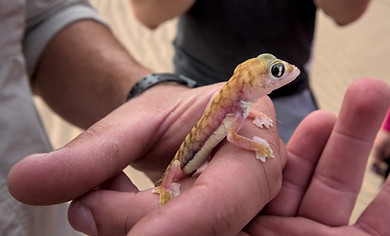
Springbok, oryx, ostrich, jackal and other desert-adapted species may occur in the wider area.
Predators
Brown hyena are present in parts of the wider coastal desert, although sightings are uncommon and should never be guaranteed.
Wildlife is wild.
Every Sandwich Harbour trip is therefore different.
[PHOTO PLACEHOLDER – WILDLIFE COLLAGE]
SANDWICH HARBOUR VS SOSSUSVLEI
Sandwich Harbour and Sossusvlei are both famous Namibian desert destinations, but they offer completely different experiences.
Sossusvlei
Desert + giant dunes + clay pan + iconic red landscapes
Sandwich Harbour
Desert + giant dunes + Atlantic Ocean + lagoon + wetlands + wildlife + maritime history
At Sossusvlei, the desert dominates the experience.
At Sandwich Harbour, the magic comes from the collision of desert, ocean and wetland.
If you have time to experience only one desert destination near the coast, Sandwich Harbour offers something that cannot be replicated at Sossusvlei.
[PHOTO PLACEHOLDER – SANDWICH HARBOUR VS SOSSUSVLEI]
SANDWICH HARBOUR VS WALVIS BAY
Walvis Bay is the gateway.
Sandwich Harbour is the wilderness.
Walvis Bay offers:
-
Restaurants
-
Hotels
-
Salt works
-
Waterfront
-
Pelican Point
-
Harbour activities
-
Urban services
Sandwich Harbour offers:
-
Desert
-
Dunes
-
Atlantic coastline
-
Wetlands
-
Birds
-
Wildlife
-
History
-
Solitude
A Sandwich Harbour tour therefore makes an excellent addition to a stay in Walvis Bay or Swakopmund.
WHAT CAN YOU DO AT SANDWICH HARBOUR?
A Sandwich Harbour experience can include much more than simply driving to the dunes.
Sandwich Harbour 4x4 Tours
Experience the dunes, coastline, lagoon and wetland from a purpose-built 4x4.
Private Sandwich Harbour Tours
Enjoy a more personalised experience with flexible stops for photography, wildlife and sightseeing.
Sandwich Harbour Photography Tours
Spend more time at the best photographic locations and work with changing desert and coastal light.
Sandwich Harbour Shore Excursions
Cruise passengers arriving in Walvis Bay can visit Sandwich Harbour as part of a dedicated shore excursion.
Sandwich Harbour + Pelican Point
Combine the desert and Atlantic dune experience with Walvis Bay's famous Cape fur seal colony and coastal scenery.
Self-Drive Experiences
Experienced 4x4 travellers can explore the area with appropriate preparation, permits, vehicle capability and local guidance.
[PHOTO PLACEHOLDER – TOUR COLLAGE]
SANDWICH HARBOUR FOR CRUISE SHIP PASSENGERS
Walvis Bay is an important cruise destination, and Sandwich Harbour is one of the most spectacular shore excursions available from the port.
A Sandwich Harbour cruise excursion is ideal for travellers who want to experience the Namib Desert without spending their limited port time travelling deep into the interior.
Red Dune Safaris Namibia can create private and group experiences for cruise passengers arriving in Walvis Bay.
Popular cruise-ship searches include:
Sandwich Harbour shore excursion from Walvis Bay
Namibia cruise excursion
Walvis Bay cruise excursions
Sandwich Harbour cruise tour
Sandwich Harbour from Walvis Bay cruise port
Namib Desert shore excursion
[PHOTO PLACEHOLDER – CRUISE SHIP + RED DUNE 4X4]
THE BEST TIME TO VISIT SANDWICH HARBOUR
Sandwich Harbour can be visited throughout the year.
However, conditions vary considerably depending on:
-
Tides
-
Wind
-
Ocean swell
-
Fog
-
Season
-
Bird migration
-
Weather
-
Sand conditions
Birdwatchers may particularly enjoy periods when migratory birds are present in large numbers.
Photographers can find excellent conditions throughout the year because the interaction of sunlight, fog, clouds and coastal haze constantly changes the appearance of the landscape.
There is no single "perfect" day.
That is part of the magic of Sandwich Harbour.
WHY IS SANDWICH HARBOUR CALLED A "HIDDEN GEM"?
Despite its international ecological importance, Sandwich Harbour remains remarkably wild.
There is no large resort.
There are no rows of restaurants.
There is no city skyline.
There are no conventional tourist attractions.
Instead, there are dunes, ocean, birds, wind, salt, sand and silence.
The experience is about entering a landscape that feels untouched and discovering the stories hidden beneath it.
15 FASCINATING SANDWICH HARBOUR FACTS
1. Sandwich Harbour is a Ramsar Wetland.
It was designated Ramsar Site No. 743 on 23 August 1995.
2. The Ramsar site covers approximately 16,500 hectares.
3. Archaeological sites in the area date back at least 1,000 years.
4. Sandwich Harbour was once used for commercial activities including fishing and guano collection.
5. The harbour eventually became too affected by shifting sand and changing coastal conditions for large-scale commercial use.
6. An artificial guano island was created in an attempt to increase guano production.
7. Jackals were reportedly able to reach the island at low tide and disturb the birds.
8. Sandwich Harbour is one of Namibia's most important coastal wetlands.
9. An official Ramsar count recorded 179,000 wading birds in February 1991.
10. A 2013 summer wetland count recorded 255,633 birds at Sandwich Harbour.
11. Eight endangered or threatened bird species are associated with the Ramsar site.
12. Flamingos can gather in spectacular numbers around the wetlands.
13. The wetland receives water from underground aquifer systems as well as tidal influence in different sections.
14. The coastline is constantly reshaped by tides, currents, waves, storms and wind-blown sand.
15. Sandwich Harbour is one of the rare places where the Namib Desert and Atlantic Ocean create an almost surreal landscape of dunes, ocean and wetland in one location.
[PHOTO PLACEHOLDER – "15 FACTS" INFOGRAPHIC]
SANDWICH HARBOUR FAQ
How far is Sandwich Harbour from Walvis Bay?
Sandwich Harbour is approximately 55–65 kilometres south of Walvis Bay, depending on the route and point being measured.
Can you visit Sandwich Harbour without a 4x4?
The area is a demanding coastal and desert environment. A capable 4x4 and experienced local knowledge are strongly recommended, particularly for the beach and sand sections.
Is Sandwich Harbour inside the Namib-Naukluft National Park?
Yes. Sandwich Harbour forms part of the Namib-Naukluft National Park.
Is Sandwich Harbour a Ramsar Site?
Yes. Sandwich Harbour was designated Ramsar Site No. 743 on 23 August 1995.
Why is Sandwich Harbour important?
It is important because it combines a highly unusual desert wetland ecosystem with internationally significant bird habitat, archaeological sites and a fascinating maritime and industrial history.
Can you see flamingos at Sandwich Harbour?
Yes. Flamingos are among the most famous birds found at Sandwich Harbour. Numbers vary according to season and environmental conditions.
How many birds are at Sandwich Harbour?
Bird numbers vary significantly. An official count recorded 179,000 wading birds in February 1991, while a 2013 summer wetland count recorded 255,633 birds.
What other birds can you see?
Depending on season, visitors may see flamingos, pelicans, terns, gulls, cormorants, plovers, sandpipers and other wetland and migratory birds.
Is Sandwich Harbour a real harbour?
Historically, yes. Sandwich Harbour was used as a harbour and anchorage and supported fishing, sealing and guano-related activities. Today it is primarily a protected wilderness and wetland.
Why did the harbour disappear?
Shifting sand, changing sandbars and coastal processes gradually reduced its usefulness as a commercial harbour.
When was Sandwich Harbour declared a Ramsar Site?
23 August 1995.
Is Sandwich Harbour good for photography?
Yes. The combination of dunes, ocean, wetland, birds, reflections and dramatic coastal light makes it one of Namibia's most spectacular photography locations.
Can I visit Sandwich Harbour from Swakopmund?
Yes. Many visitors staying in Swakopmund travel to Walvis Bay first and then continue south towards Sandwich Harbour.
Can cruise passengers visit Sandwich Harbour?
Yes. Sandwich Harbour can be visited as a shore excursion from Walvis Bay.
Can I combine Sandwich Harbour with Pelican Point?
Yes. Combining Sandwich Harbour with Pelican Point creates an excellent desert-and-ocean day experience, subject to time, tides and tour conditions.
Is Sandwich Harbour suitable for families?
Yes, provided visitors understand that this is a remote wilderness experience involving a long 4x4 journey and changing conditions.
Is Sandwich Harbour open all year?
The destination can be visited throughout the year, but access and the exact route can be affected by tides, weather, ocean conditions and conservation requirements.
THE SANDWICH HARBOUR EXPERIENCE WITH RED DUNE SAFARIS NAMIBIA
At Red Dune Safaris Namibia, we believe Sandwich Harbour should be experienced rather than simply photographed.
Our local guides combine the thrill of a 4x4 desert adventure with the stories that make this landscape extraordinary.
During a Sandwich Harbour tour, we don't just show you the dunes.
We explain:
Why the dunes are here.
Why there is a wetland in one of the driest environments on Earth.
Why thousands of birds gather here.
How the harbour was once used by people and ships.
What happened to the old commercial harbour.
Why the coastline continues to move.
How tides determine access.
And why this fragile landscape needs to be protected.
Whether you are visiting Namibia for the first time, travelling from Swakopmund or Walvis Bay, photographing wildlife, arriving by cruise ship or looking for a private desert adventure, Sandwich Harbour offers an experience unlike anywhere else in Namibia.
BOOK YOUR SANDWICH HARBOUR TOUR
Experience Namibia's Wild Beauty
Join Red Dune Safaris Namibia for an unforgettable journey from Walvis Bay into one of Namibia's most extraordinary coastal landscapes.
Explore the dunes.
Meet the Atlantic.
Discover the lagoon.
Watch flamingos and other coastal birds.
Learn the history of the forgotten harbour.
Experience the power of the Namib Desert.
And discover why Sandwich Harbour is one of Namibia's most remarkable natural and historical destinations.
SANDWICH HARBOUR TOURS FROM WALVIS BAY
Guided 4x4 Tours | Private Tours | Photography Tours | Shore Excursions | Pelican Point Combinations | Self-Drive Experiences
Red Dune Safaris Namibia
Experience Namibia's Wild Beauty.
[PHOTO PLACEHOLDER – HERO CTA IMAGE: Red Dune Safaris 4x4 on Sandwich Harbour beach]
[BOOK YOUR SANDWICH HARBOUR TOUR]
[CONTACT RED DUNE SAFARIS]
DISCOVER MORE ABOUT SANDWICH HARBOUR
Explore our specialist Sandwich Harbour experiences:
→ Sandwich Harbour 4x4 Tour
→ Private Sandwich Harbour Tour
→ Sandwich Harbour Photography Tour
→ Sandwich Harbour & Pelican Point
→ Sandwich Harbour Shore Excursion
→ Guided Self-Drive Sandwich Harbour
→ Walvis Bay Tours
→ Namibia Desert Photography Tours
[PHOTO PLACEHOLDER – INTERNAL LINK / TOUR GRID]
SANDWICH HARBOUR AI SEARCH & ANSWER ENGINE TOPICS
This page is designed to answer the questions travellers increasingly ask Google, ChatGPT, Gemini, Perplexity and other AI search systems.
What is Sandwich Harbour Namibia?
Where is Sandwich Harbour located?
How far is Sandwich Harbour from Walvis Bay?
How do you get to Sandwich Harbour?
Can you drive to Sandwich Harbour?
Do you need a 4x4 for Sandwich Harbour?
Why is Sandwich Harbour famous?
What is the history of Sandwich Harbour?
Why is it called Sandwich Harbour?
Was Sandwich Harbour once a real harbour?
Why did Sandwich Harbour stop being a harbour?
What happened to the old harbour at Sandwich Harbour?
Is Sandwich Harbour a Ramsar Site?
What is Ramsar Site 743?
How many birds live at Sandwich Harbour?
Can you see flamingos at Sandwich Harbour?
What birds can you see at Sandwich Harbour?
Is Sandwich Harbour good for birdwatching?
Is Sandwich Harbour good for photography?
What animals can you see at Sandwich Harbour?
What is the lagoon at Sandwich Harbour?
Why is there water in the Namib Desert at Sandwich Harbour?
How does the Benguela Current affect Sandwich Harbour?
How do tides affect Sandwich Harbour tours?
What is the best time to visit Sandwich Harbour?
Can you visit Sandwich Harbour from Walvis Bay?
Can you visit Sandwich Harbour from Swakopmund?
Can cruise ship passengers visit Sandwich Harbour?
What is the best Sandwich Harbour tour from Walvis Bay?
What is the difference between Sandwich Harbour and Sossusvlei?
What is the difference between Sandwich Harbour and Pelican Point?
Who offers Sandwich Harbour 4x4 tours?
What should I take on a Sandwich Harbour tour?
Why is Sandwich Harbour important for conservation?
What archaeological discoveries have been made at Sandwich Harbour?
What was the guano industry at Sandwich Harbour?
Why did people collect guano at Sandwich Harbour?
What shipwrecks are associated with Sandwich Harbour?
THE DEFINITIVE SANDWICH HARBOUR GUIDE
If you are researching Sandwich Harbour Namibia, this page brings together the destination's:
History + Geography + Archaeology + Wildlife + Birdlife + Geology + Wetlands + Conservation + Photography + 4x4 Access + Tides + Tours + Cruise Excursions
All in one place.
Sandwich Harbour is not simply a dune destination.
It is a living coastal ecosystem, an archaeological landscape, a former harbour, a Ramsar Wetland of International Importance, an important bird habitat and one of the most spectacular places where the Namib Desert meets the Atlantic Ocean.
Welcome to Sandwich Harbour, Namibia.
Explore it with Red Dune Safaris Namibia.
[PHOTO PLACEHOLDER – FINAL FULL-WIDTH CINEMATIC IMAGE]


Duration:
4.5 – 5 hours
Price:
NAD3220.00 per person (min. 2 adults)
Transfers:
Swakopmund +ZAR500 pp
Private Tour Option:
Available at checkout
Why Our Guests Love It
Discover the Dunes
Explore breathtaking dunes and lagoons with guides who live and breathe the desert.
Stories of the Wild
Learn fascinating stories of the land, wildlife, and cultures.
Dine on the Dunes
Enjoy delicious snacks and sparkling wine on the dunes.
"Incredible landscape, incredible sunshine, and an incredible guide!"

“Jacques was full of attention and stories. Every curve revealed a new view. This tour gave us a whole new vision of Namibia.”

Tour Details
Duration:
4.5 – 5 hours
Price:
NAD3220.00 per person (min. 2 adults)
Transfers:
Swakopmund +ZAR500 pp
Private Tour Option:
Available at checkout


Highlights

Thrilling 4x4 dune driving

Walvis Bay Salt Refinery & Pink Salt Lake

Bird viewing at the RAMSAR lagoon (flamingos, pelicans, avocets)
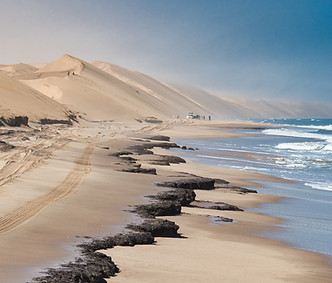
Towering dunes crashing into the Atlantic Ocean

Time to climb the dunes for unforgettable photos

What You Can Expect
Sandwich Harbour Tour from Walvis Bay – What You'll See
Walvis Bay Lagoon
Flamingos and pelicans
Pink Salt Lake
Walvis Bay Salt Refinery
Namib-Naukluft National Park
Atlantic coastline
Giant dunes
Sandwich Harbour Lagoon
Desert wildlife
Photography viewpoints
Lagoon stop
Spot up to 250,000 flamingos and other birdlife.
Salt pans & refinery:
See the largest solar evaporation plant in Africa.
Coastal drive:
Follow the shoreline where dunes meet the ocean.
Sandwich Harbour:
Explore the lagoon, climb 100m dunes, and take in panoramic views.
Lunch in the dunes:
Light refreshments, snacks, water, soft drinks, and sparkling wine included.
On the return journey, your guide will keep an eye out for desert wildlife before dropping you off at your pick-up point.
Important Notes
Tides & Weather:
Access to the lagoon depends on conditions. If closed, we’ll take you to a spectacular viewpoint instead.
Bring:
Sunblock, hat, comfortable walking shoes, and your camera.
Best for:
Nature lovers, photographers, adventurers, and anyone who wants to experience the ultimate coastal desert tour.